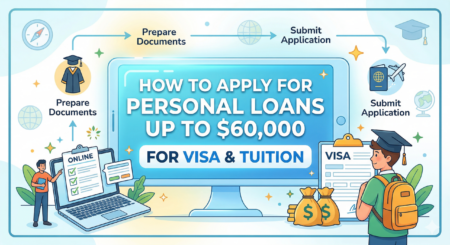
How to Apply for Personal Loans Up to $60,000 for Visa and Tuition
Many students and professionals dream of studying or working abroad, but the high costs of tuition, visa processing, and living expenses make it difficult to manage. Personal loans up to $60,000 can provide the necessary funds without requiring collateral. These loans allow individuals to finance tuition fees, visa costs, travel, accommodation, and other related expenses.
Unlike traditional education loans that may have strict eligibility requirements, personal loans offer flexibility and fast processing. Banks, private lenders, and international loan providers now offer unsecured loans for students and professionals planning to go abroad. With these loans, pursuing international education or work opportunities has become more accessible.
This guide explains what personal loans for visa and tuition are, the different types, eligibility requirements, salary expectations after graduation, and a detailed step-by-step application process.
What Are Personal Loans for Visa and Tuition
Personal loans for visa and tuition are unsecured loans designed to cover expenses related to studying or working abroad. Borrowers do not need to provide property or assets as collateral. Approval is based on factors such as credit history, income, academic records, and future earning potential.
These loans can cover expenses including:
- Tuition fees
- Visa processing
- Travel and airfare
- Accommodation and living expenses
- Health insurance
- Study materials and books
The loan amount typically ranges from $10,000 to $60,000 depending on the lender, course, and country. Students in high-demand fields often receive higher loan amounts due to better repayment prospects.
Reasons to Choose Personal Loans
Many students and professionals do not have property to offer as collateral, making unsecured personal loans the best option. These loans provide fast access to funds and allow borrowers to focus on their studies or work opportunities abroad.
Key advantages include:
- No property required
- Quick approval process
- Flexible repayment options
- Funds can be used for tuition, visa, and other related expenses
- Suitable for international education or work programs
Lenders approve these loans because graduates from reputable programs often secure high-paying jobs, reducing the risk of default.
Countries Where Personal Loans Are Commonly Used
Personal loans for visa and tuition are particularly useful in countries with high education or visa costs. Popular destinations include:
- United States
- Canada
- United Kingdom
- Australia
- Germany
- Ireland
- Netherlands
Lenders are more likely to approve larger loans for students and professionals going to countries where tuition fees are high and career opportunities are strong.
Typical Costs of Studying or Working Abroad
| Expense | USA | Canada | UK | Australia | Germany |
|---|---|---|---|---|---|
| Tuition per year | 20,000–45,000 | 15,000–35,000 | 18,000–40,000 | 20,000–42,000 | 5,000–20,000 |
| Living expenses | 12,000–25,000 | 12,000–20,000 | 12,000–22,000 | 15,000–25,000 | 10,000–15,000 |
| Visa & insurance | 1,000–3,000 | 1,000–2,000 | 1,000–2,000 | 1,000–2,000 | 1,000–2,000 |
| Total per year | 35,000–70,000 | 30,000–55,000 | 32,000–62,000 | 36,000–67,000 | 15,000–30,000 |
| Loan possible | Up to 60,000 | Up to 60,000 | Up to 60,000 | Up to 60,000 | Up to 60,000 |
Because tuition and living expenses are high in these countries, personal loans provide a practical solution to fund education or work programs abroad.
Types of Personal Loans
Bank Personal Loans
Many banks provide unsecured personal loans for tuition and visa expenses. These loans often require a co-signer and have flexible repayment options. Approval is based on creditworthiness and income.
Private Lenders
Private lenders provide loans for international education and work programs without requiring collateral. Benefits include quick approval, direct transfer of funds to the university or student, and flexible interest rates.
International Loan Providers
Some lenders specialize in funding students studying abroad. They offer loans for multiple countries, online applications, and higher amounts for top-ranked universities.
Government or Agency-Supported Loans
Certain governments and agencies provide loans for citizens studying abroad. These loans typically have lower interest rates, longer repayment periods, and specific eligibility criteria.
Differences Between Collateral and No-Collateral Loans
| Feature | Loan Without Collateral | Loan With Collateral |
|---|---|---|
| Property required | No | Yes |
| Approval speed | Fast | Slower |
| Maximum loan amount | Medium to high | High |
| Interest rate | Slightly higher | Lower |
| Documentation | Less | More |
Students and professionals often choose unsecured personal loans due to their convenience, even if interest rates are slightly higher.
Salary Range After Graduation
| Field | USA | Canada | Australia | UK | Germany |
|---|---|---|---|---|---|
| Engineering | 70,000–110,000 | 60,000–90,000 | 65,000–100,000 | 60,000–85,000 | 60,000–90,000 |
| IT / Software | 80,000–120,000 | 70,000–100,000 | 75,000–110,000 | 65,000–90,000 | 65,000–95,000 |
| Healthcare | 70,000–110,000 | 60,000–85,000 | 65,000–100,000 | 60,000–85,000 | 60,000–90,000 |
| Business / Finance | 65,000–100,000 | 55,000–85,000 | 65,000–95,000 | 60,000–90,000 | 60,000–90,000 |
Graduates in IT, engineering, healthcare, and finance often earn high salaries, increasing their ability to repay loans efficiently.
Requirements for Loan Approval
Most lenders require:
- Admission letter from a recognized university or program
- Passport or valid ID
- Academic records or transcripts
- Course and fee details
- Bank statements or co-signer details
Lenders may also consider the student’s future earning potential, especially for graduate or professional programs.
CHECK: Apply for Study Abroad Loan Up to $60,000 Without Collateral
How to Apply for Personal Loans Up to $60,000
Step 1: Choose the program and country
Select the course and country before applying. Lenders require proof of admission and estimated expenses.
Step 2: Check eligibility
Confirm that the lender offers loans for your chosen university, country, and program.
Step 3: Prepare documents
Typical documents include:
- Admission letter
- Passport or ID
- Academic certificates
- Course and fee structure
- Bank statements or co-signer details
Step 4: Compare lenders
Evaluate interest rates, repayment terms, processing fees, and approval time.
Step 5: Submit the loan application
Complete the application online or at the lender’s office, uploading all required documents.
Step 6: Wait for approval
Approval time ranges from a few days to a few weeks, depending on the lender.
Step 7: Sign loan agreement
Check all terms, including interest rate, repayment period, and total amount, before signing.
Step 8: Receive funds
The lender usually transfers tuition directly to the university and may release part of the funds for living expenses.
Tips to Increase Approval Chances
- Choose recognized universities and programs
- Maintain strong academic records
- Apply early and prepare accurate documents
- Demonstrate your future earning potential
- Use trusted lenders experienced in international loans
Students in high-demand programs such as IT, engineering, business, and healthcare are more likely to be approved for larger loan amounts.
Best Programs for Loan Approval
- Engineering
- Computer science
- Medicine and healthcare
- Business administration
- Finance and accounting
- Data science
- Nursing
- Artificial intelligence
- Cybersecurity
- Construction management
These fields typically lead to high-paying jobs abroad, reassuring lenders about loan repayment.
Advantages of Personal Loans for Visa and Tuition
- No collateral required
- Loan amounts up to $60,000
- Fast application and approval process
- Flexible repayment options
- Can cover tuition, visa, and living costs
- Available for multiple countries
These loans make international education and work opportunities accessible for students and professionals without property or assets.
Conclusion
Personal loans up to $60,000 allow students and professionals to finance tuition fees, visa costs, and living expenses without providing collateral. These loans are especially useful for studying or working in countries like the United States, Canada, the United Kingdom, Australia, and Germany.
Choosing high-demand programs, applying to recognized universities, and submitting accurate documents increase the chances of loan approval. By comparing lenders, applying early, and understanding repayment terms, students and professionals can secure funding and achieve their international education and career goals successfully.